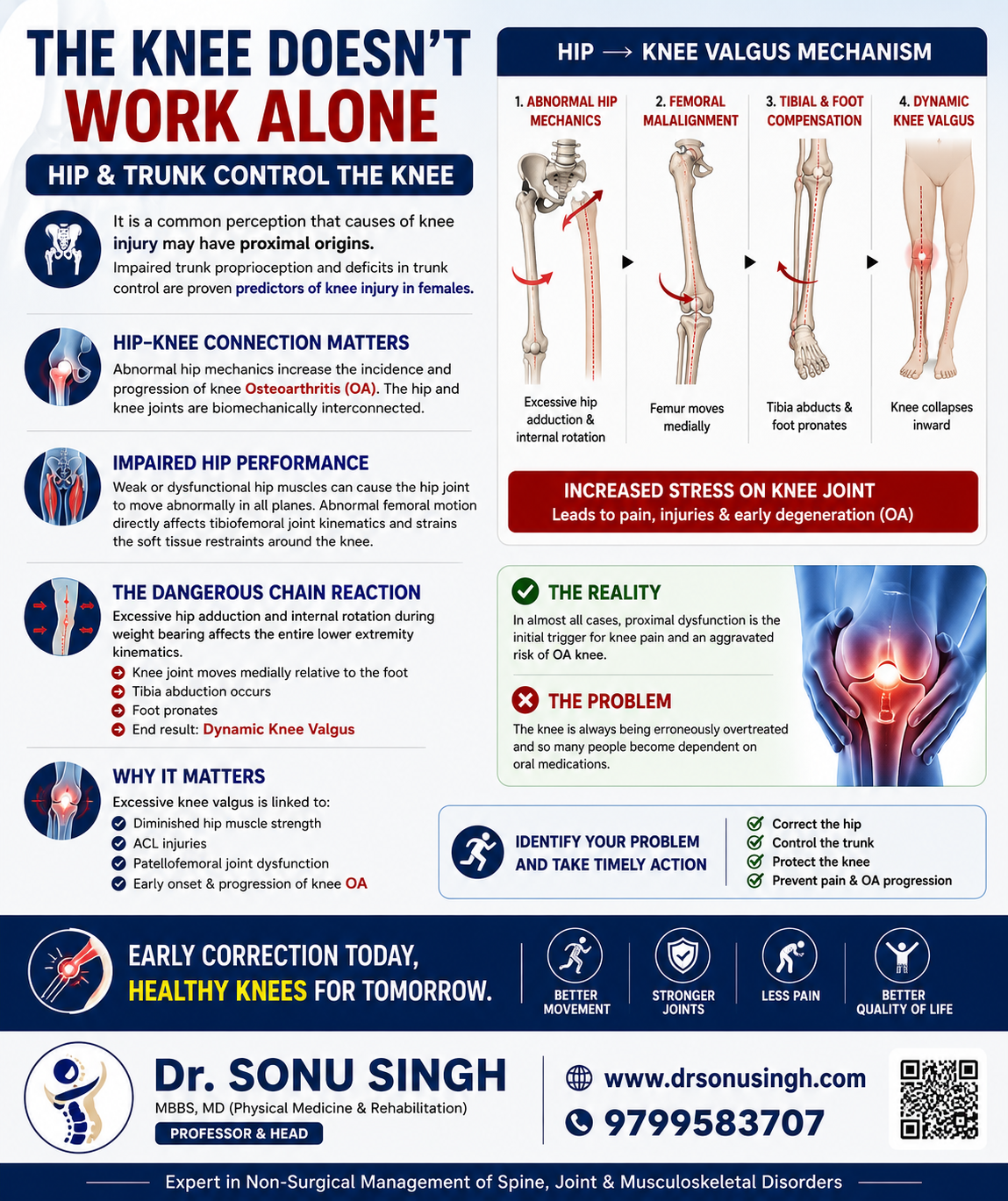
Knee pain and injury often originate proximal to the knee, particularly from the hip and trunk.
Impaired trunk control and proprioception, especially in females, are established predictors of knee injury. With growing evidence of hip–knee interdependence, abnormal hip mechanics play a key role in the development and progression of knee osteoarthritis (OA).
Weakness or dysfunction of the hip musculature affects femoral control in all planes. This leads to excessive hip adduction and internal rotation during weight bearing, altering lower limb alignment.
As a result:
 The knee moves medially (dynamic valgus) The tibia abducts and the foot pronates Increased stress occurs across the tibiofemoral and patellofemoral joints
This dynamic knee valgus is strongly associated with:
 ACL injuries Patellofemoral pain Early degenerative changes (OA knee)
Clinical Insight:
In many patients, knee pathology is secondary to proximal biomechanical dysfunction, yet treatment is often focused only on the knee.
Most Importantly:
Correct the hip. Control the trunk. Protect the knee.
Early identification and correction of hip muscle imbalance and faulty biomechanics can:
Reduce knee pain Prevent injury Slow progression of osteoarthritis Minimize dependence on medications