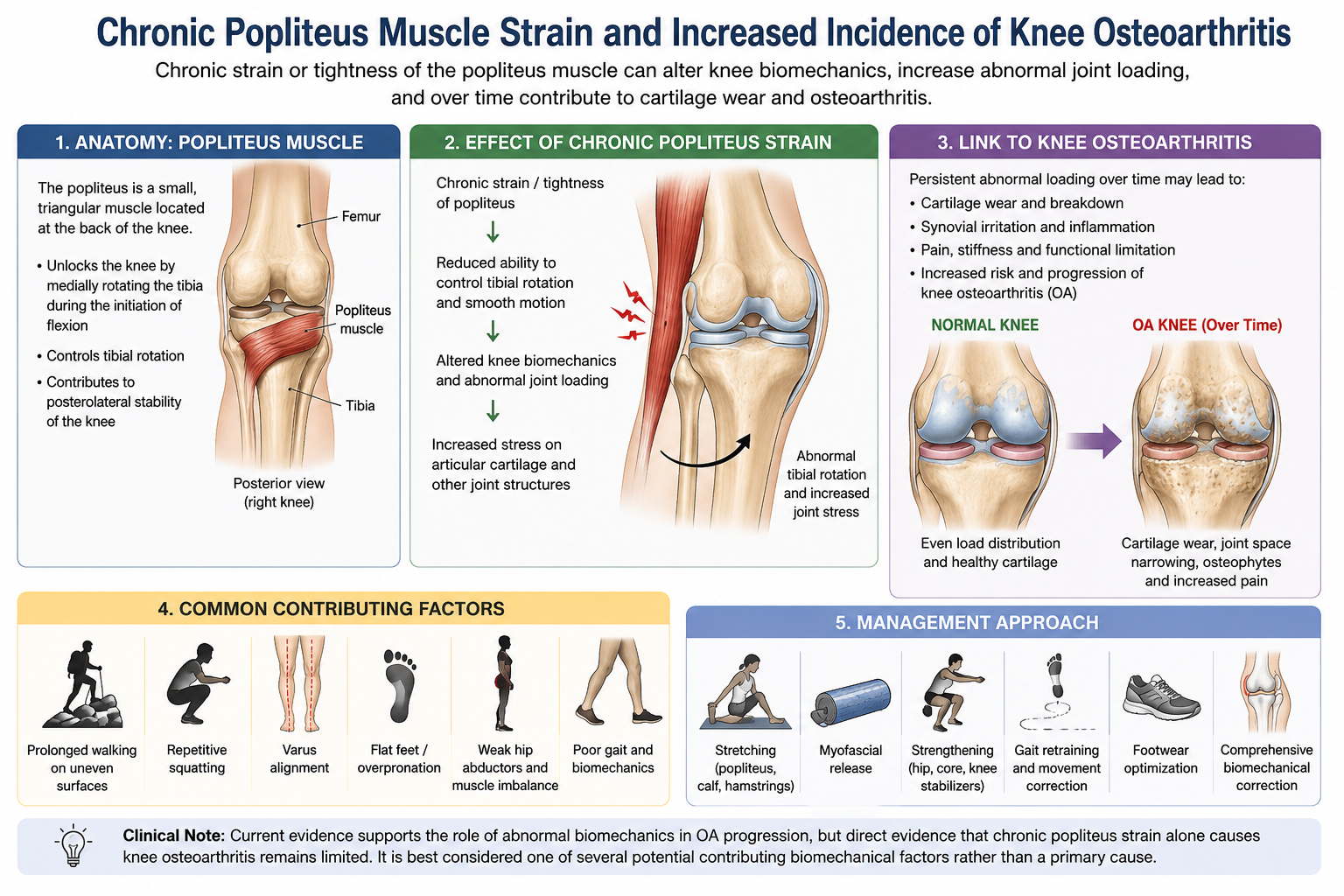
The popliteus muscle is a small but essential stabilizer located at the back of the knee. It helps "unlock" the knee during the initiation of flexion, controls tibial rotation, and contributes to posterolateral knee stability during walking and weight-bearing activities.
Chronic strain or tightness of the popliteus muscle may alter normal knee biomechanics, leading to increased stress across the tibiofemoral joint. Persistent dysfunction can reduce smooth rotational movement, increase medial compartment loading, and elevate intra-articular pressure. Over time, these abnormal mechanical forces may accelerate cartilage wear, synovial irritation, pain, and stiffness, potentially contributing to the progression of knee osteoarthritis.
Common contributing factors include prolonged walking on uneven surfaces, repetitive squatting, altered gait, varus alignment, flat feet, weakness of the hip abductors, and poor lower-limb biomechanics.
Early recognition and management of popliteus dysfunction—including stretching, myofascial release, strengthening of the surrounding musculature, gait retraining, footwear optimization, and comprehensive biomechanical correction—may help reduce abnormal knee loading and improve joint function. While chronic popliteus dysfunction is not established as an independent cause of knee OA, addressing it may be an important component of a comprehensive rehabilitation program for selected patients with biomechanical abnormalities.
Current evidence supports the role of abnormal biomechanics in OA progression, but direct evidence that chronic popliteus strain alone causes knee osteoarthritis remains limited. It is best considered one of several potential contributing biomechanical factors rather than a primary cause.