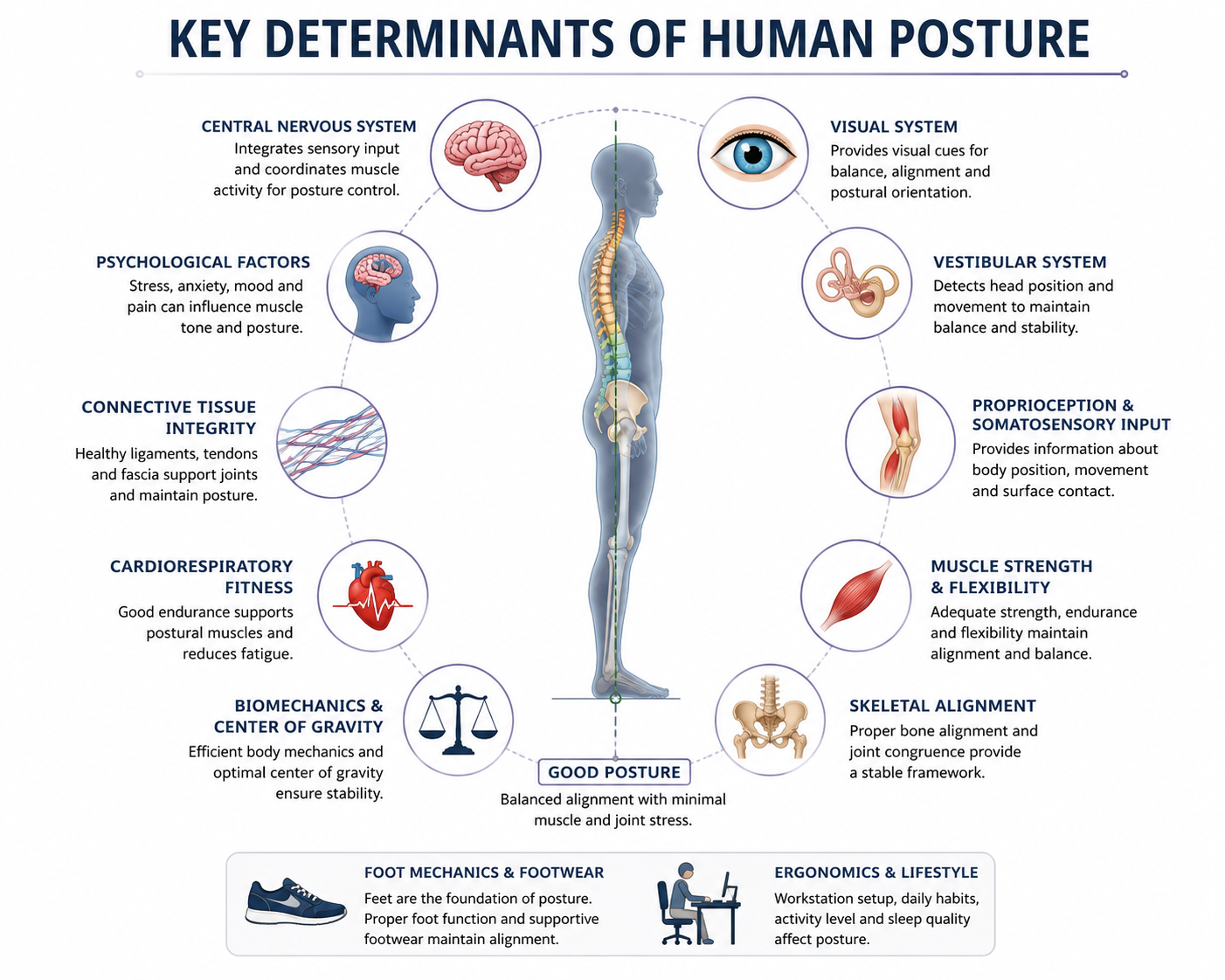
Human posture is a dynamic process that depends on the coordinated function of multiple body systems. The central nervous system integrates information from the visual, vestibular, and proprioceptive systems to maintain balance and upright alignment.
Normal posture also requires adequate muscle strength, endurance, flexibility, and appropriate muscle tone, particularly in the core, spinal, hip, and lower-limb muscles. Proper skeletal alignment and healthy connective tissues help distribute mechanical loads efficiently across joints.
The feet serve as the foundation of posture. Flat feet, altered foot mechanics, or inappropriate footwear can disrupt lower-limb alignment and affect the knees, hips, pelvis, and spine.
Psychological factors such as stress, anxiety, chronic pain, and fatigue may alter muscle activation patterns and contribute to postural dysfunction. Additionally, prolonged sitting, poor ergonomics, obesity, and sedentary lifestyles further compromise posture.
From a PM&R perspective, posture reflects the integrated function of the entire kinetic chain. Comprehensive assessment and correction of these determinants are essential for preventing musculoskeletal pain, improving movement efficiency, and reducing the risk of long-term disability.
Good posture is not simply standing straight—it is the ability to maintain optimal body alignment with minimal energy expenditure while adapting efficiently to movement and environmental demands.
Dr. (Lt Col) Sonu Singh