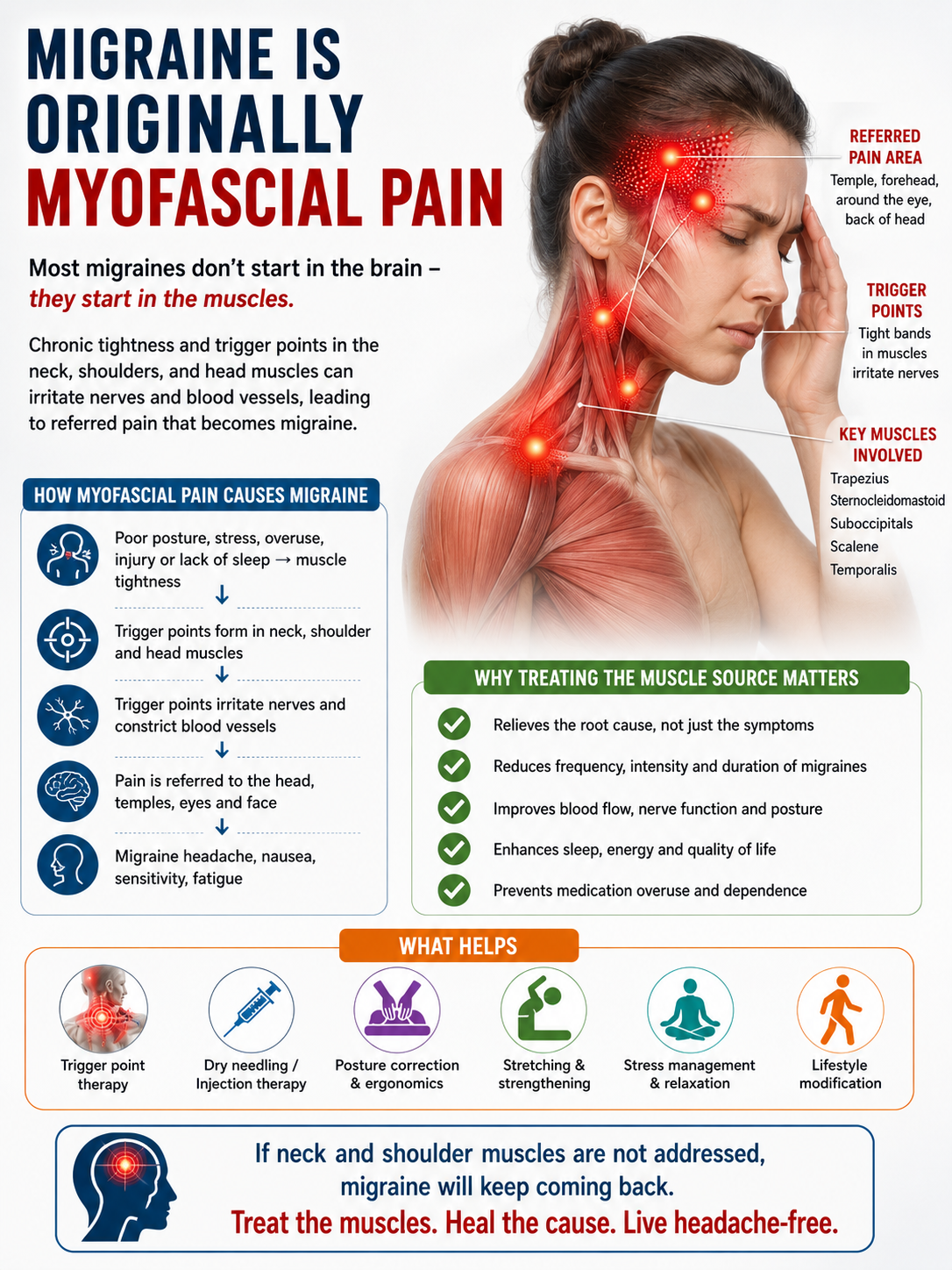
Migraine is often considered a neurological disorder, but in many patients the origin may begin from chronic myofascial tightness and trigger points in the neck, shoulder, and head muscles. Tight muscles such as the upper trapezius, sternocleidomastoid, suboccipital, and temporalis muscles can irritate surrounding nerves and blood vessels, producing referred pain patterns that mimic or trigger migraine headaches.
Poor posture, prolonged screen time, stress, muscle overload, and lack of sleep further increase muscle tension and sympathetic nervous system overactivity, making migraine episodes more frequent and severe.
Treating the underlying myofascial dysfunction through posture correction, stretching, strengthening, trigger point therapy, interventional pain management, stress control, and lifestyle modification may help reduce the frequency and intensity of migraine attacks.
Treat the muscles early — restore balance, reduce pain, and improve quality of life.