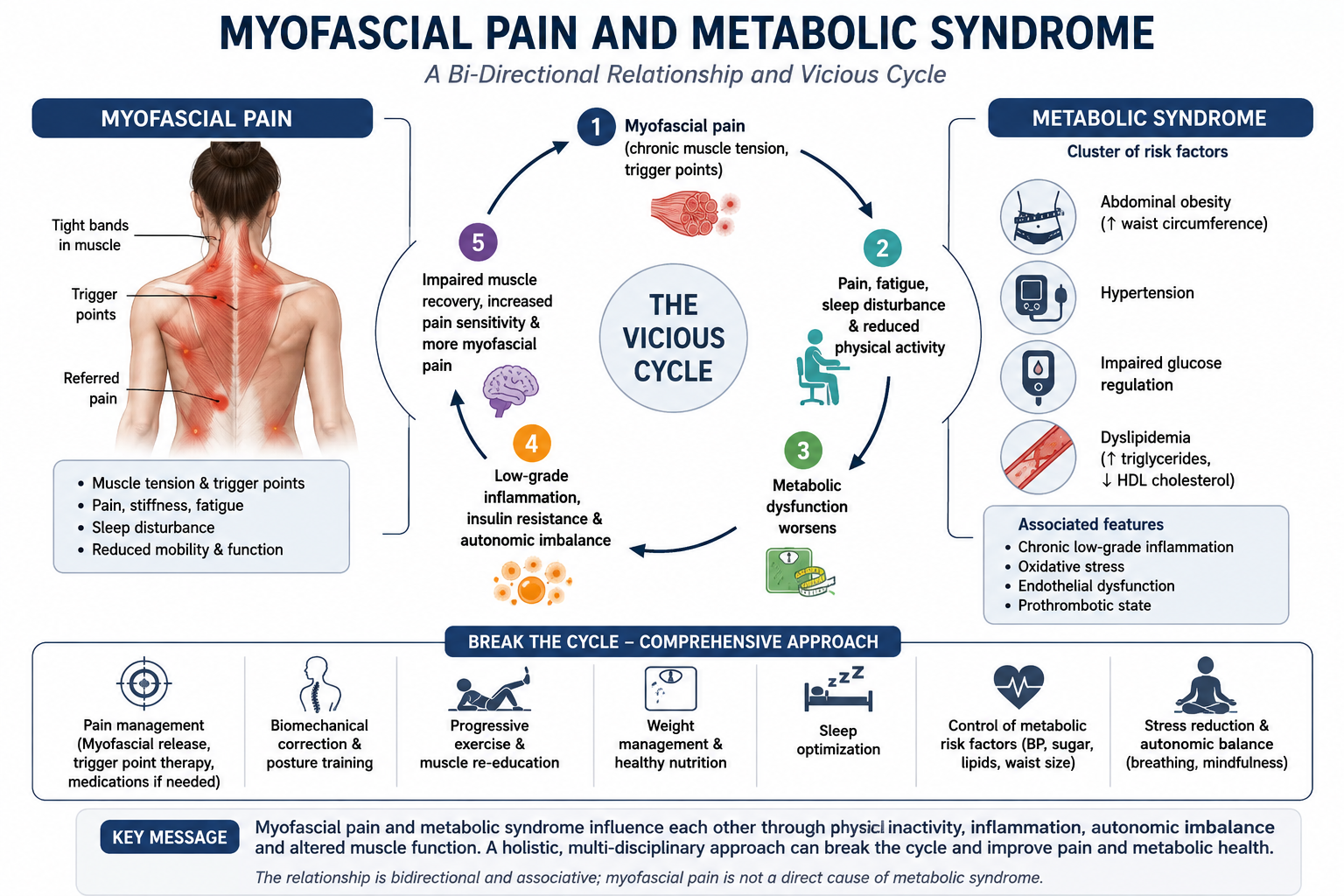
Myofascial pain and metabolic syndrome may be interconnected through several factors, including physical inactivity, chronic low-grade inflammation, autonomic imbalance, and altered muscle function. Metabolic syndrome is characterised by abdominal obesity, hypertension, dysglycemia, and abnormal lipid levels, and it is often associated with reduced physical activity and impaired musculoskeletal function.
Persistent muscle tension and myofascial trigger points can contribute to pain, fatigue, sleep disturbances, and reduced mobility. This creates a vicious cycle: pain limits physical activity, reduced physical activity worsens metabolic health, and metabolic dysfunction may lead to impaired muscle recovery and increased pain sensitivity.
In this cycle, myofascial pain leads to decreased activity, contributing to metabolic dysfunction, impaired muscle health, and heightened pain.
A holistic approach that combines pain management, biomechanical correction, progressive exercise, muscle re-education, weight management, sleep optimisation, and the management of metabolic risk factors may help break this cycle.
It is important to note that the relationship between myofascial pain and metabolic syndrome is likely bidirectional and associative; myofascial pain should not be considered a direct cause of metabolic syndrome.