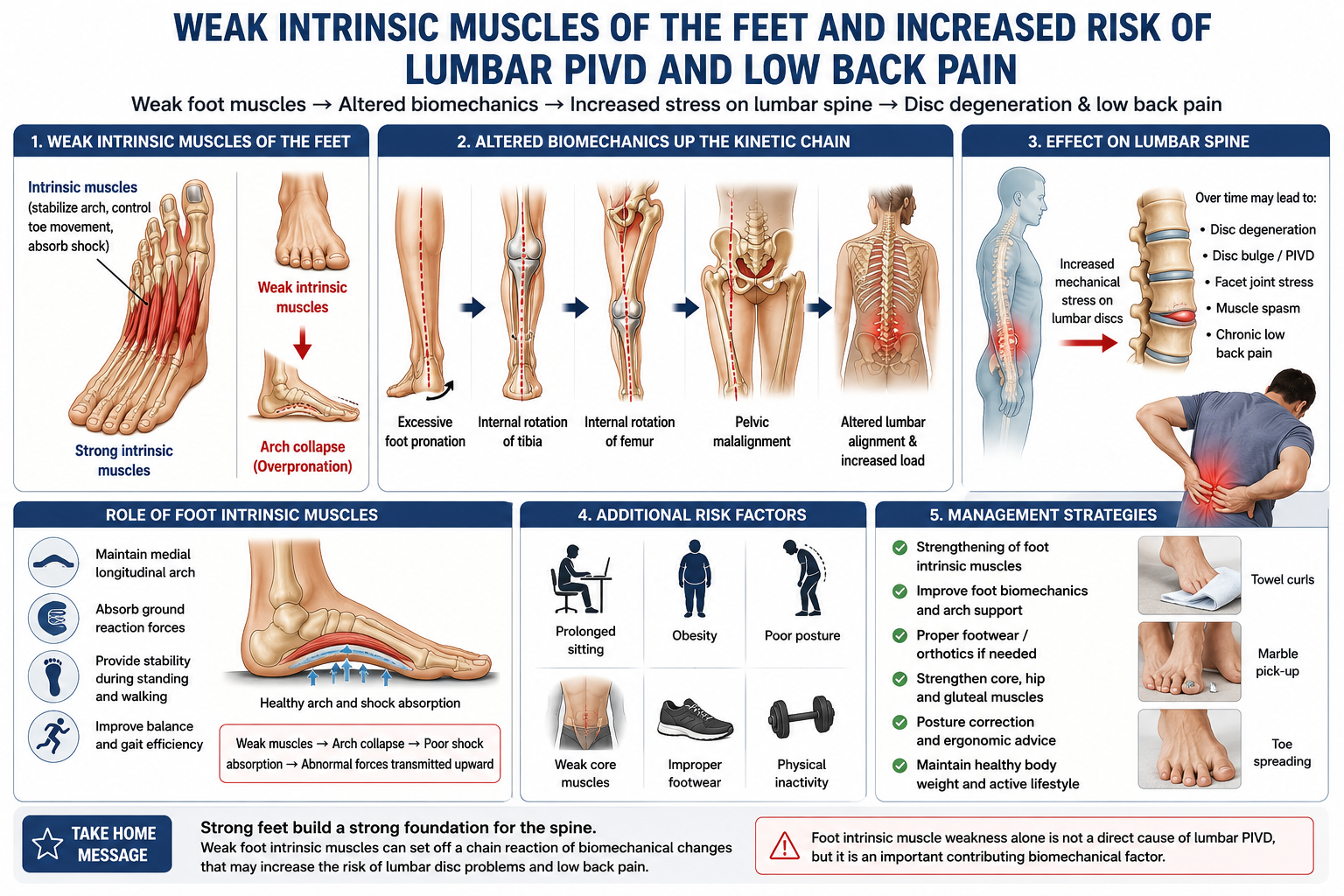
The intrinsic muscles of the foot play a vital role in maintaining the medial longitudinal arch, absorbing ground reaction forces, and providing stability during standing and walking. Weakness of these muscles may lead to excessive foot pronation and collapse of the arch, altering lower-limb biomechanics. These changes can be transmitted upward through the ankle, knee, hip, and pelvis, increasing mechanical stress on the lumbar spine. Over time, abnormal spinal loading may contribute to chronic low back pain and may increase the mechanical risk factors associated with lumbar intervertebral disc degeneration and prolapse (PIVD), particularly when combined with poor posture, obesity, prolonged sitting, or weak core muscles. Strengthening the foot intrinsic muscles, correcting biomechanics, improving footwear, and maintaining core stability may help reduce abnormal forces throughout the kinetic chain and support spinal health.
Current evidence supports the relationship between foot biomechanics and low back pain. However, foot intrinsic muscle weakness alone has not been established as a direct cause of lumbar PIVD; it should be considered one of several biomechanical factors that may contribute to increased spinal loading.